Giving What We Can

Peter Singer · 🔸10% Pledger since 2009

Take the 10% Pledge with Peter Singer

My name is Peter Singer. I took the 🔸10% Pledge in 2009, and more than 11,000 people have joined since. There is a huge number of people who could easily pledge to give 10%, and I hope you will.

Not ready for 10%? Start with a 🔹Trial Pledge →

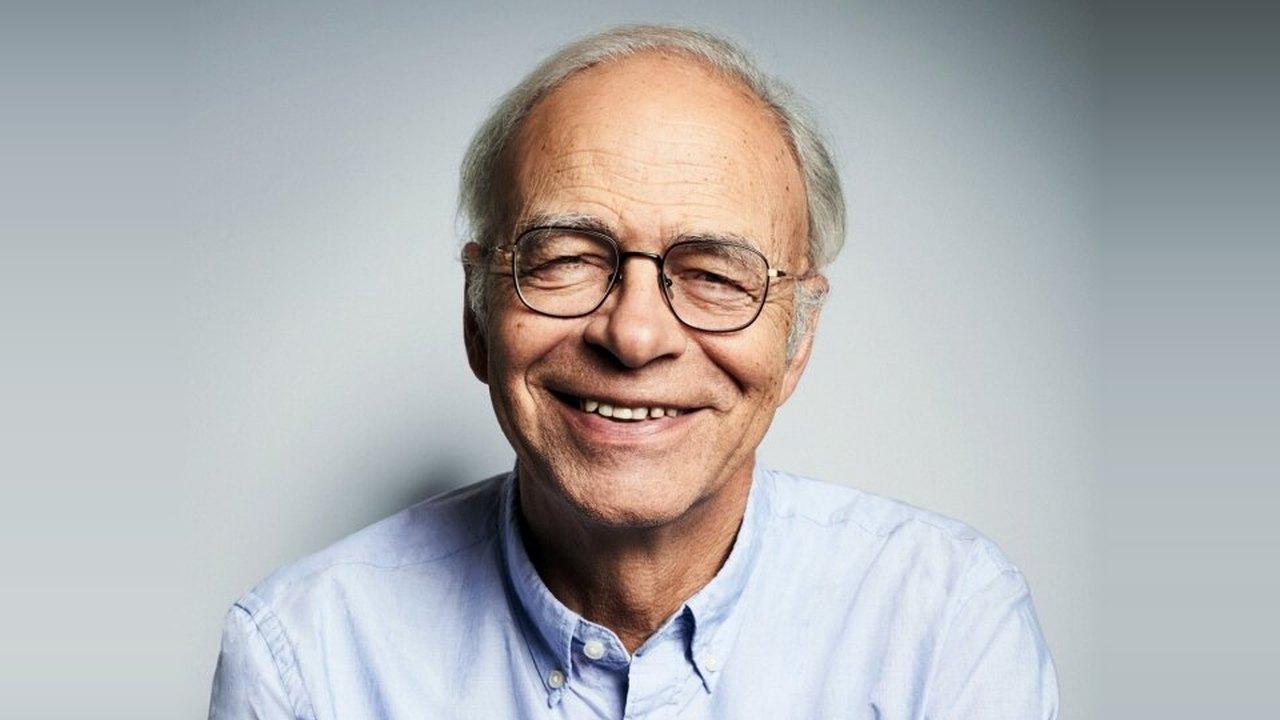
Peter Singer
1,493pledgers inspired by Peter
1,082🔸10% Pledges
411🔹Trial Pledges
$29Mgiven since they pledged

My story

In the early 1970s, 9 million refugees fled from what is now Bangladesh into India. I was a graduate student at the time, and I asked myself what my responsibility was.

Many people thought: this has nothing to do with me, so why should I help? I wanted an example to show that if you can save a life at low cost to yourself, you ought to do it, even if you are in no way responsible for the problem.

So I asked my readers to imagine that they are walking past a shallow pond and see that a small child has fallen in and is in danger of drowning. There is no one else around. They have put on some of their best clothes, and those clothes will be ruined if they rush in.

Almost everybody’s reaction is: of course you should still save the child. How can you compare a child’s life with replacing some of your clothes? That is the response we should have. And distance is no excuse. The people in need may be on the other side of the world, but there are organisations that can take your help and use it to save lives.

Some people say poverty is a bottomless pit. That’s really quite false. In the 1950s, 20 million children were dying each year before they turned 5. In the UN’s 2024 report, it was 4.9 million. We are making steady progress.

But that is still about 13,000 children dying every day, and for them it is too late to wait until the number somehow gets to zero. If you can save one of those children for roughly $5,000, surely that’s something we ought to be doing.

The 10% Pledge was started by Toby Ord when he founded Giving What We Can. I was already giving more than 10%, so it wasn’t difficult for me to take it. I was number 16. Now more than 11,000 people have added to that tally.

If you can give 10% quite comfortably, don’t think of it as a sacrifice. Our happiness doesn’t really depend on what material goods we are able to acquire. It depends a lot more on the sense that there is some meaning in our lives. Living in harmony with your values is a good way to live well.

The best way to find out is to try it. My guess is that it will make surprisingly little difference to your life. And once you can see that you can do it, take the pledge.
Peter Singer

Why I give like this

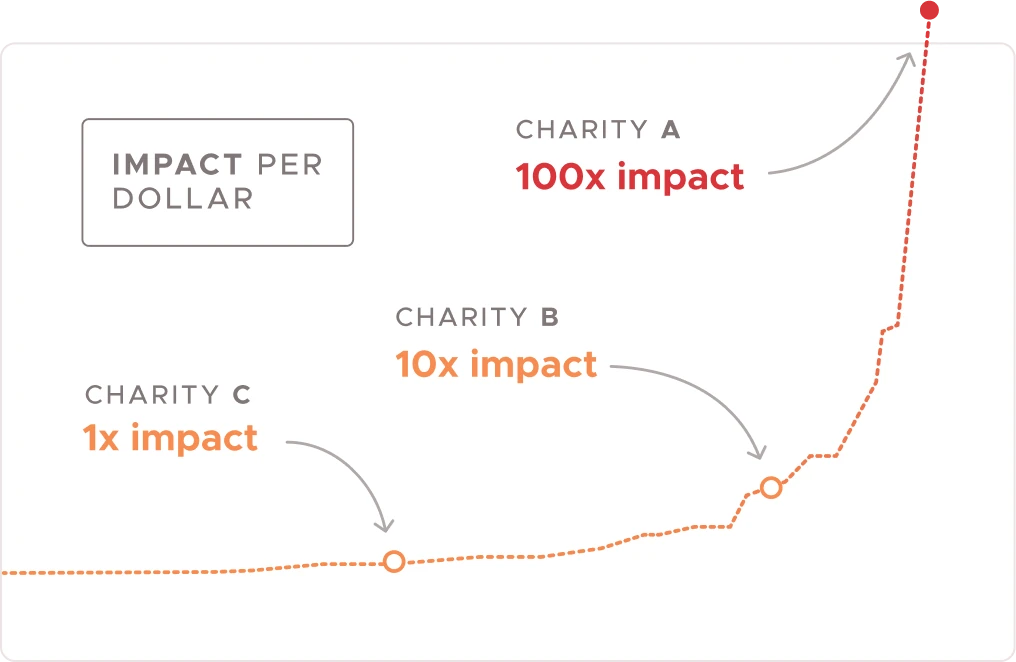
Some charities can do a lot more good

Over the last 15 years, there has been a lot of research into how best to help people in extreme poverty. Giving out bed nets against the mosquitoes that carry malaria is one proven way to save children’s lives. There are good scientific studies showing that things like this work, and at very low cost. They can save a life for around $5,000, or prevent blindness for maybe a couple of hundred dollars.

Graph of impact per dollar: charity A has 100 times the impact of charity C, and charity B has 10 times
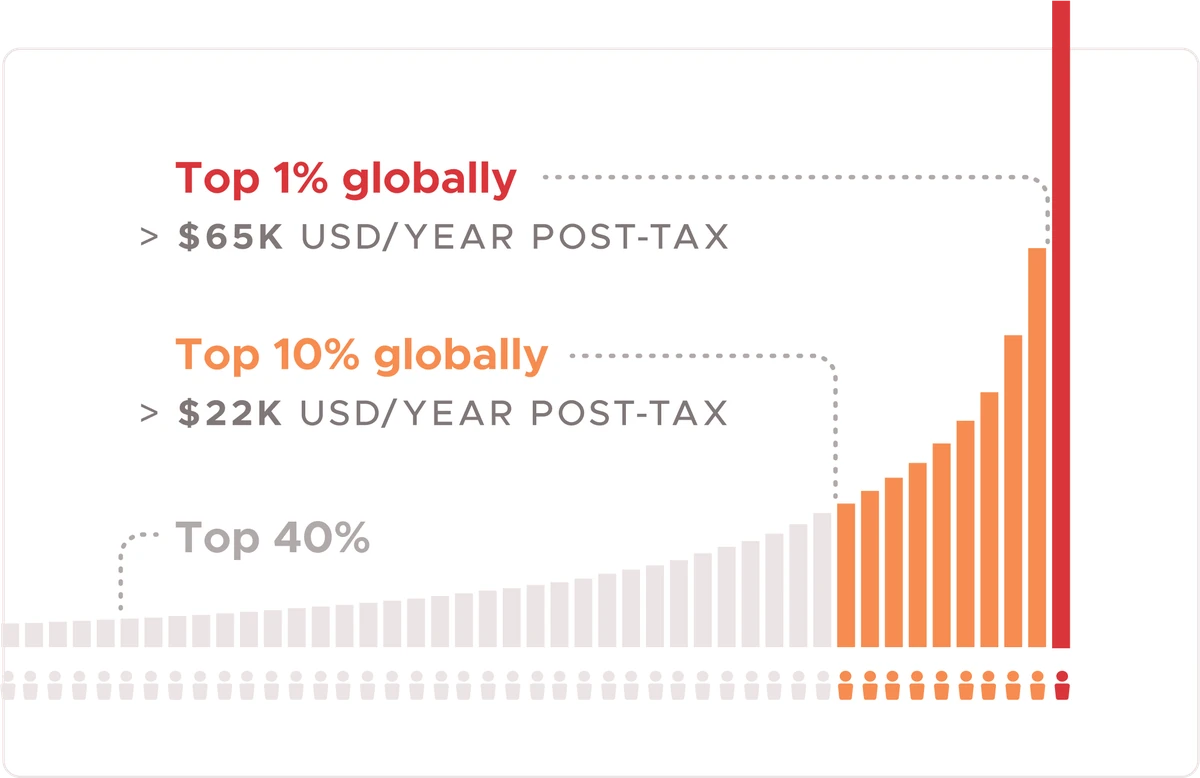
Graph of the global income distribution: earning over $65,000 a year post-tax puts you in the top 1%, and over $22,000 in the top 10%

We have more power than we often realise

People think there are others richer than they are who should be doing more. I would certainly say the rich should give more. But anybody who has money to spend on things they don’t really need has something to give. If you earn more than $23,000 a year after tax, you are in the richest 10% of people in the world, even after adjusting for the cost of living. To people in extreme poverty, we seem really rich, just as billionaires seem really rich to us.

See where your income ranks →

What are the 🔸10% Pledge and the 🔹Trial Pledge?

The idea comes from Giving What We Can, a non-profit that helps people give effectively. But it’s also a much older tradition. For centuries, people have set aside part of what they earn to support those in need.

Why take a pledge? A pledge is a commitment that makes it more likely you will actually do it. It also builds a community. When people can see that many thousands of others are giving, it gets easier for them to join.

Since 2009, more than 11,000 people in over 120 countries have taken the 🔸10% Pledge. Together with Trial pledgers, they have donated more than $390 million.

🔸10% Pledge

A public commitment to give at least 10% of your income to the charities that help the most. It is a minimum, not a maximum.

Take the pledge

🔹Trial Pledge

Not ready for 10%? You choose your own percentage and how long to give for, from 6 months to 5 years, so you can see how giving feels.

Start a Trial Pledge

Where I give

I give to charities recommended by The Life You Can Save, the organisation I founded, and to groups working to end factory farming. Here are 4 that do a great deal of good at very low cost.

Against Malaria Foundation  — Bednets To Prevent Malaria
Against Malaria Foundation

Bednets To Prevent Malaria

Distributes bed nets to prevent malaria, a disease that mostly affects children under 5.

Info
Helen Keller Intl— Vitamin A supplementation programme
Helen Keller Intl

Vitamin A Supplementation

Provides vitamin A supplements to prevent childhood blindness and death.

Info
GiveDirectly
GiveDirectly

Direct Cash Transfers

Gives money directly to people living in extreme poverty, so they can decide what they need most.

Info
The Humane League (Corporate campaign programs)
The Humane League

Corporate Animal Welfare Campaigns

Works to improve conditions for farmed animals and helps companies strengthen their animal welfare policies.

Info

Frequently asked questions

You might have some questions about how this works. Here are answers to the most common ones.

The pledge is a public commitment to give part of your income to the most effective charities in the world. You choose the percentage and how long you commit for. It is fine to give less in some years and more in others.

Do you have another question? Contact the Giving What We Can team at community@givingwhatwecan.org and we will be happy to help.

“Living in harmony with your values is a good way to live well.”

Peter Singer · 🔸10% Pledger since 2009

Take the pledge